Concrete Slab & Foundation Work
Expert foundation and slab installation for residential and commercial projects throughout San Bruno.
The Foundation of Everything You Build
Your foundation is literally what holds your entire structure together. Whether you are building a new home, adding a garage, or constructing a commercial building, the quality of your concrete slab and foundation work determines how stable and long-lasting your project will be. A properly built foundation prevents settling, cracking, and moisture problems that can cost tens of thousands of dollars to fix later.
Here in San Bruno, we deal with unique soil conditions and seismic requirements that make foundation work especially important. The Bay Area sits on active fault lines, which means your foundation needs to be engineered correctly to handle ground movement. We follow strict building codes and work closely with engineers to make sure every foundation we pour meets or exceeds local requirements.
We have poured foundations for homes, ADUs (accessory dwelling units), garages, sheds, commercial buildings, and industrial facilities throughout San Bruno and the surrounding area. Each project is different, but they all start with the same principle: thorough planning, proper site preparation, and quality materials installed by experienced professionals.
Types of Concrete Foundations We Install
The type of foundation you need depends on your project, your property, and your budget. Slab-on-grade foundations are the most common and cost-effective option for single-story buildings. This is a flat concrete pad poured directly on prepared ground. It works great for homes, garages, and commercial buildings where you do not need a basement or crawl space.
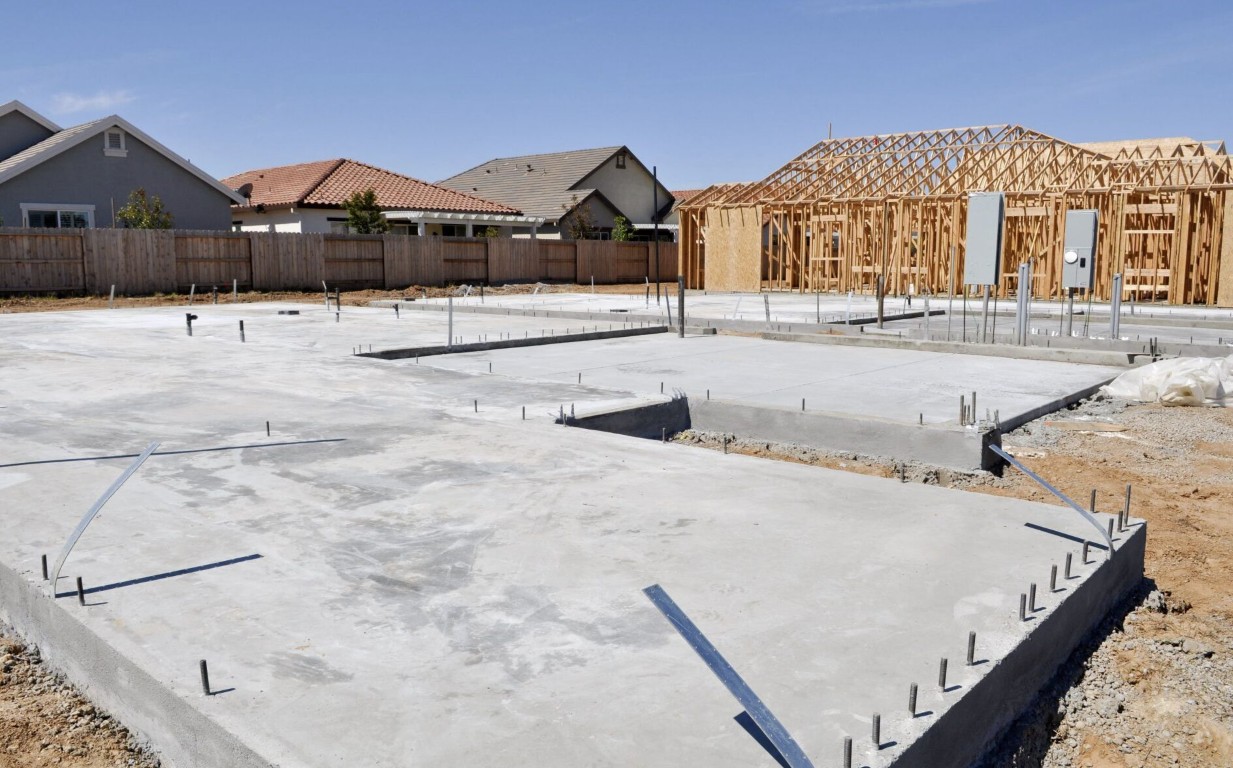
Slab-on-grade foundations are popular in San Bruno because they are affordable, fast to install, and work well with our mild climate. We excavate to the proper depth, install a compacted gravel base, add reinforcement, and pour a thick concrete slab. Plumbing and electrical lines are installed before the pour, which means careful planning is essential. Once the concrete is poured, your structure can be framed and built on top of it.
For projects that need more support or have challenging soil conditions, we also build stem wall foundations. These involve pouring concrete footings below the frost line, then building a short concrete or block wall (the stem wall) on top. A concrete slab is poured inside the stem wall to create the floor. This type of foundation provides excellent stability and works well on sloped lots or areas with poor soil conditions.
We also pour footings for post-and-beam structures, foundation walls for basements, and specialty foundations for heavy equipment or machinery. Every project starts with soil testing and engineering to make sure we choose the right foundation type and design for your specific situation.
What Goes Into a Quality Foundation
- Comprehensive site evaluation and soil testing
- Proper excavation and grading for drainage and stability
- Compacted base material to prevent settling
- Vapor barriers to protect against moisture infiltration
- Heavy-duty steel reinforcement for strength and crack prevention
- High-strength concrete mix designed for structural applications
- Precise placement and leveling to meet engineering specifications
- Proper curing to achieve maximum strength and durability
Our Foundation Installation Process
Every successful foundation project starts with planning and preparation. We review your building plans, check local building codes, and coordinate with engineers and inspectors to make sure everything is done right. If you do not have plans yet, we can work with you and an engineer to develop them.
Site preparation is the next critical step. We excavate to the depth specified in your plans, which varies depending on the type of foundation and soil conditions. For slab-on-grade foundations, we typically excavate 12 to 18 inches below the finished floor level. For stem wall foundations, footings go deeper, sometimes several feet below grade.
Once the excavation is complete, we grade the area to ensure proper drainage away from your structure. Standing water under a slab is a recipe for problems, so we pay close attention to slope and drainage during this stage. We install a compacted gravel base that provides a stable platform and allows water to drain away from the concrete.
Before we pour concrete, we install a vapor barrier (usually heavy plastic sheeting) to prevent moisture from wicking up through the slab. Then comes the reinforcement. We use steel rebar arranged in a grid pattern, secured at the proper height within the slab thickness. The rebar is tied together and supported on chairs to keep it in the right position during the pour.
The concrete pour itself is a carefully orchestrated process. We use concrete trucks to deliver fresh mix directly to your site, and our crew works quickly to place, spread, and level the concrete before it starts to set. For larger slabs, we use laser levels and screeds to ensure the surface is perfectly flat and at the correct elevation. Control joints are cut or formed into the slab to control where cracks occur as the concrete shrinks during curing.
After the pour, proper curing is essential. We apply curing compounds and keep the concrete moist as it hardens. Building inspectors come out at various stages to verify that everything meets code requirements. Once the foundation passes inspection and is fully cured, your project can move forward with framing and construction.
Why Foundation Quality Matters So Much
Cutting corners on foundation work always comes back to haunt you. A poorly built foundation can crack, settle unevenly, allow water infiltration, or even fail structurally. These problems are expensive and difficult to fix once your building is up. In extreme cases, foundation failure can make a structure unsafe and uninhabitable.
In the Bay Area, seismic considerations add another layer of importance. Your foundation needs to be strong enough and flexible enough to handle ground movement during an earthquake. That means using the right amount of reinforcement, following engineering specifications exactly, and using high-quality materials that meet seismic building codes.
Water damage is another major concern. A foundation that allows moisture to enter your building leads to mold, rot, and structural damage. Proper site grading, vapor barriers, and drainage systems are not optional extras. They are essential components of any good foundation system. We make sure every foundation we build keeps water where it belongs: outside and away from your structure.
The bottom line is simple: your foundation is not the place to save money or cut corners. Investing in quality concrete foundation work from the start saves you money and headaches in the long run. It also gives you peace of mind knowing that your building rests on a solid, properly engineered base that will last for generations.
Working with ADUs and Additions
Accessory dwelling units (ADUs) have become extremely popular in San Bruno as homeowners look for ways to add living space or rental income to their properties. Every ADU needs a proper foundation, and we specialize in building foundations for these smaller structures.
ADU foundations follow the same principles as full home foundations but are often simpler and faster to install because of the smaller size. We work within tight spaces, coordinate with your existing utilities, and make sure the new foundation ties into your property's drainage system correctly. Whether you are building a detached ADU in your backyard or converting your garage, we provide the foundation work you need to get your project off the ground.
Room additions also require foundation work that matches your existing structure. We carefully evaluate your existing foundation, make sure the soil conditions are suitable, and design the new foundation to integrate seamlessly with what is already there. This prevents differential settlement (where one part of the building settles more than another) and ensures a stable connection between old and new.
We also pour foundation pads for heavy equipment, generators, HVAC units, and other mechanical systems. These specialty foundations need to support concentrated loads and often require isolation from the main building to prevent vibration transfer. We have experience with all types of foundation work, from small equipment pads to large commercial building foundations.